
The EZE Blog

Trader stories, systems, psychology and prop firm news, straight from the Game of Forex community.

Browse by topic

Start Your Challenge Today

80/20 split from your first payout
Real A Book funded account
No time limit
EZEREWARD
Proudly presented to:
Hamza R.
Your reward:
$20,335.70
Showing 1 to 15

Would You Take This Challenge?

EZE Challenge· 7 Aug 2026 Watch on YouTube

Every few days someone asks us the same question in slightly different words: "Am I ready for a funded challenge?" It's the right question, and most people answer it the wrong way. They look at the profit target and ask whether they can make 10%. The honest test is the opposite one: can you make 10% without ever losing 5% in a day?

What the challenge actually measures

A prop challenge isn't a talent contest. The target exists so we can see your edge; the loss limits exist so we can see your discipline. Between the two, the limits matter more. They're the exact skills that keep a funded account alive later.

  • Risk per trade: if one trade can breach your daily limit, the position was too big. Full stop.
  • Pace: there's no time limit at EZE, so a slow, boring pass beats a fast, lucky one.
  • Repetition: could you do it again next month? That's the difference between an edge and a streak.

If you read those three lines and felt calm, take the challenge. If you felt a twinge, spend two more weeks in the Academy first. The challenge will still be here.

Trading involves substantial risk of loss. A challenge fee buys an evaluation, never a guaranteed outcome.

What Do They Know That We Don't?

Trading Psychology· 6 Aug 2026 Watch on YouTube

Watch twenty consistently profitable traders work and you'll notice something unsettling: their trading is boring. No countdowns, no adrenaline, no all in moments. What do they know that the rest of us don't?

They know that the outcome of any single trade is noise. A good process loses regularly. That's what a 45% win rate with 2:1 reward looks like up close. So they've stopped grading themselves on results and started grading themselves on execution: did I take my setup, at my size, with my stop? Then the trade was a good trade, win or lose.

The three habits underneath

  • They decide before, not during. Entry, stop and size are chosen while the market is closed to their money. In the trade, there's nothing left to decide.
  • They size for the losing streak. Eight losses in a row is a statistical certainty eventually. Their risk per trade assumes it's coming.
  • They journal like it's the job. Because it is. The trade log is where the edge gets found, sharpened, and proven.

None of this is secret. It's just unglamorous, which is exactly why it still works.

Live Trade With Waqas Ahmed

Live Trading· 6 Aug 2026 Watch on YouTube

This week's live session covered a full gold and forex trade from plan to close, no cuts, no cherry picking. Here's the written version for those who prefer reading to watching.

The plan before the trade

The session started, as always, with the boring part: marking the levels that mattered from the higher timeframe, writing down the one scenario worth trading, and, critically, the scenario that would mean no trade today. If you don't define the "do nothing" case in advance, the market will talk you out of it.

Entry came only when price returned to the marked level and showed rejection on the trading timeframe. Stop went behind the structure that proved the idea wrong, and size was calculated from the stop distance, never the other way around.

What to copy from it

  • The trade was planned when the market couldn't argue back.
  • The stop meant something: "if price gets here, my idea is wrong."
  • Management was pre decided: partial at 1R, rest at the target. No improvising.

Catch the next session live. The schedule is posted in the community every week.

1000 Comments and I'll Reveal It

Community· 6 Aug 2026 Watch on YouTube

We put a challenge to the community this week: get the video to a thousand comments, and we reveal the thing everyone keeps asking about. The comments came faster than expected. You lot don't mess about.

Beyond the fun, there's a serious point to community milestones like this. Trading is an isolating craft. Most people around you don't understand why you stare at charts, and the internet's trading corners are full of noise. A community that trades the same way (risk first, process first) is genuinely rare, and it changes how fast you improve.

Ask a question in a room of a few thousand traders and someone has already made your exact mistake, journalled it, and can save you a month of tuition. That's the real reveal, honestly: the shortcut is other people's losses.

If you're not in yet, the Discord is free and open before you ever buy anything. Link on the Academy page.

This Might Be the Smartest Update Yet.

Prop Firm News· 5 Aug 2026 Watch on YouTube

We shipped an update this week that we genuinely think is the smartest thing we've built in months, and in this post we'll walk through what changed and, more importantly, how to judge any platform update a firm announces.

How to read an update announcement

Prop firms love announcements. Some are real improvements; some are repackaged restrictions. The test is always the same: does it move risk away from the trader, or towards them?

  • A lower fee with unchanged rules: real improvement.
  • A higher split with a new hidden consistency rule: read it twice.
  • Faster payouts with no new conditions: real improvement.
  • "Simplified" rules that quietly shrink the loss limits: that's a restriction wearing a suit.

We hold ourselves to the same test, in both directions. Every change we ship goes on the changelog with the old value next to the new one, so you never have to diff the terms yourself.

FunderBlu New Model: Is This a Game Changer?

Prop Firm News· 5 Aug 2026 Watch on YouTube

A new funding model landed in the prop space this week and the timeline is split between "game changer" and "gimmick". We went through the published terms line by line. Here's the framework we used, which works for any firm's new model, including ours.

The four questions that matter

  • Where does the firm's revenue come from? If the honest answer is "trader losses", every other feature is decoration. Volume and commission models align incentives; loss capture models don't.
  • How is drawdown measured? Static from starting balance is trader friendly. Trailing drawdown that follows your equity peak can turn a winning account into a breach.
  • When can you actually withdraw? A headline split means little if the payout conditions are a maze. Look for the calendar, the minimums, and the fine print on the first payout.
  • What ends the account? Count the kill switches. The more subjective they are, the more careful you should be.

Run any model through those four and you'll know within ten minutes whether it's built for the trader or for the marketing department.

Your Life Won't Change by Itself

Trading Psychology· 5 Aug 2026 Watch on YouTube

There's a version of you that already passed the challenge, trades funded size calmly, and withdraws every month. The uncomfortable truth of this week's video: that version is built on days exactly like today.

Traders love the idea of a turning point: the one course, the one indicator, the one account that changes everything. But nobody's life changes by itself, and almost nobody's changes in one move. It changes at the rate you keep promises to yourself: the journal you fill in when nobody checks, the session you sit out because the plan said to, the size you don't increase after two good weeks.

Here's a practical way to start: pick the smallest rule you keep breaking, not the biggest goal you keep missing, and keep it for ten straight sessions. Just that one. Discipline compounds exactly like capital does: slowly, then suddenly.

The market pays whoever shows up prepared, indefinitely, without applause. Become that person on the small days and the big days take care of themselves.

You'll Have to Earn It Now

Trading Psychology· 4 Aug 2026 Watch on YouTube

There was a time when prop capital was easy to get and easier to lose, with firms handing out accounts like flyers, traders burning through them like matches. That era is ending across the industry, and honestly: good.

When funding is too easy, it teaches exactly the wrong lesson: that accounts are disposable. Blow one, buy another, repeat. That cycle doesn't build traders; it builds customers. The traders who last treat every account, evaluation or funded, as if it's the only one they'll ever get.

Earning it changes how you trade it

Something happens psychologically when you pass a real evaluation: the account stops being a lottery ticket and becomes property. You defend property. You size properly on it, you skip B grade setups on it, you stop revenge trading it. Behaviours no rulebook can force become automatic when the thing was earned.

So yes, you'll have to earn it now. That's not the barrier. That's the training.

The Secret to Becoming a Profitable Trader

Trading Tips· 4 Aug 2026 Watch on YouTube

Every week someone asks for the secret, so this week's video finally gives it, with the warning that you already know it, and knowing it isn't the hard part.

The secret: profitable traders are paid for their risk management, not their predictions. Market direction is close to a coin flip on any single trade, even for the best. The edge lives in the asymmetry (losing 1 when wrong, making 2 when right) and in surviving long enough for that maths to play out.

The unsexy checklist

  • Risk a fixed, small fraction per trade, the same number on good days and bad.
  • Define the invalidation before entry. A stop is a statement: "here, I'm wrong."
  • Journal every trade, review weekly, change one thing at a time.
  • Judge yourself over fifty trades, never five.

Do that for six months and you'll be ahead of the majority of people who bought a course looking for something more exciting. The Academy's Risk Management track covers each point in depth, free as always.

From One Account to Financial Freedom

Trader Stories· 3 Aug 2026 Watch on YouTube

This week's story follows a trader who started with one small funded account and, over two years, scaled it into something that changed his month to month life. We tell it because it's instructive, and we tell it carefully, because stories like this get abused in this industry.

What actually happened

No single month was spectacular. His edge was a plain session based setup, risked at under 1% per trade. What compounded wasn't the account so much as the consistency: every scaling milestone hit, none skipped, no resets. The boring path, the one nobody screenshots.

Two details worth stealing: he withdrew regularly rather than letting the balance become an ego number, and he kept his position size a full milestone behind what the rules allowed. Room to breathe is a strategy.

One trader's journey is a story, not a projection. Most people who attempt funded trading do not reach this outcome. Trade with money and expectations you can afford.

His full interview is on the channel; the scaling ladder he climbed is documented on the Rewards page.

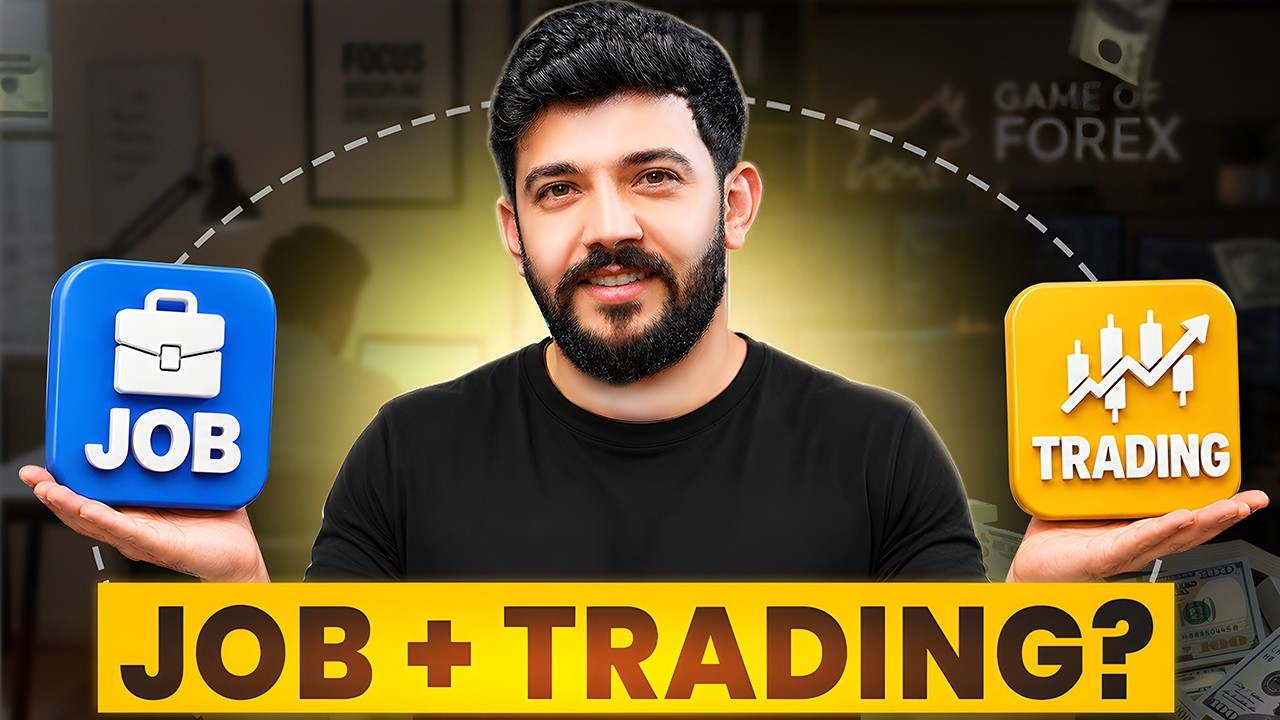
How to Manage Trading with a Job or Studies

Trading Tips· 3 Aug 2026 Watch on YouTube

"I have a job. Can I even do this?" is maybe the most common question in our Discord. This week's video answers it properly: yes, and in some ways the job is an advantage. Financial pressure is the worst co pilot a trader can have.

The part time playbook

  • Pick one session and own it. London open before work, or the New York overlap after. One window, every day, beats random hours everywhere.
  • Trade the higher timeframes. H1/H4 setups need minutes of attention, not hours. Alerts do the watching; you do the deciding.
  • Prepare on the weekend. Levels marked and scenarios written on Sunday turn weekday trading into execution instead of analysis.
  • Cap the decisions. One or two A grade setups a day. A tired mind after a work shift should be following a checklist, not improvising.

No time limit and no minimum trading days on EZE evaluations exists precisely for this: pass on your schedule, not ours.

Gut Feeling or Strategy?

Trading Systems· 3 Aug 2026 Watch on YouTube

Every trader has felt it: the chart looks right in a way you can't fully articulate. Is that intuition worth trading on, or is it the most expensive feeling in the market? This week's video takes both sides seriously.

Real intuition exists, but it's compressed experience, not magic. After a few thousand chart hours, your brain recognises patterns faster than your conscious mind can name them. The catch: an untrained gut produces the identical feeling from fear, boredom, or the need to win back yesterday's loss. From the inside, they're indistinguishable.

The honest test

Write the feeling down as a rule and backtest it. "This looks like a fake out" becomes "sweep of the prior low that closes back inside range within two candles." If the rule survives fifty historical examples, congratulations, your gut found an edge, and now it's a system. If it doesn't, your gut found a bias, and it just saved you the tuition fee.

Strategy first, gut as a filter, never the reverse. Discretion earns its place only after the rules have proven theirs.

They Mocked the Losses... Not the Wins.

Trader Stories· 2 Aug 2026 Watch on YouTube

One of our funded traders posted his losing streak publicly: every red day, every drawdown screenshot. The mockery arrived on schedule. Eight months later he posted the equity curve that followed, and the same people called him lucky. This week's story is about what happened in between.

Posting losses took more discipline than taking them. But it did something unexpected: it removed the secret. With nothing to hide, revenge trading lost its point. The journal became public property, the risk rules became promises made to an audience, and quitting quietly stopped being an option.

Why losses read as failure, and why they aren't

Every backtest of every profitable system contains streaks that look, in isolation, like the system is broken. The crowd mocks the losses because the crowd grades single frames of a long film. The trader survives them because he'd sized for them before they arrived.

Nobody mocks the wins. Remember that the next time you're tempted to judge a strategy, yours or anyone's, by its worst week.

Would One Trade a Day Change Everything?

Trading Systems· 2 Aug 2026 Watch on YouTube

Here's a thought experiment from this week's video: what if you were only allowed one trade per day? One bullet. Miss it or waste it, done until tomorrow. Would your results get worse, or embarrassingly better?

For most traders, the honest answer stings. Pull up your journal and mark your first trade of each day against everything after it. Almost everyone finds the same pattern: the first, planned trade carries the edge; trades two through seven are mostly reaction: to a win (greed), to a loss (revenge), or to boredom dressed up as opportunity.

Try the constraint for two weeks

  • Plan the one setup you'd take, the night before.
  • If it comes, execute at full planned size. If it doesn't, the day is a success. You followed the plan.
  • Log what you would have traded beyond it. Watching those phantom trades lose is the fastest overtrading cure known.

One good trade a day, compounded by discipline, is a career. Seven mediocre ones is a donation.

The Results Speak for Themselves

Trader Stories· 1 Aug 2026 Watch on YouTube

The phrase gets thrown around as a mic drop: "the results speak for themselves." This week's video asks the follow up nobody likes: what are the results actually saying, and over what sample?

A month of screenshots says almost nothing; variance produces monsters and heroes every month. Results start speaking somewhere past fifty trades, and they only speak clearly when the full ledger is visible: wins, losses, sizes, dates. That's why we publish payout data with timestamps and put every leaderboard figure next to its account size. Cherry picked results aren't results; they're advertising.

Reading your own results honestly

  • Expectancy per trade, not total profit, is the number that predicts the future.
  • Compare max drawdown to your rules, not your feelings.
  • If removing the best three trades breaks the curve, the curve was three trades, not an edge.

Let the results speak, just make them show their working first. See how funded traders' numbers are verified on the Reviews page.

Keep reading

Start Your EZE Challenge Today

80/20 split from your first payout
Real A Book funded account
Instant payouts, no time limit
EZE Account #200-84921LIVE · A BOOK
Equity
$213,406.88
+6.70%
Balance$208,120
Daily DD1.4% / 5%
Last payout$8,120 · 3m 12s

Prove Your Skills with a Trusted Firm

We've been building the A Book model since 2023. Join us now!
640K+EZE accounts
worldwide
4.8/5Trustpilot · 61 reviews